Buying guide
Best Ceramic Media for Rock Tumbling: Size, Quantity and When to Use It
Choose ceramic media by barrel volume, cylinder size and how often you tumble, then use it to improve load geometry rather than as a substitute for good rock selection.
Top ceramic-media picks
See the products before the deep dive
Start with the shortlist, then use the guide below to decide which tradeoffs actually matter for your batch.

GANGOU 2 LB Ceramic Tumbling Media
Small rotary barrels that need reusable non-abrasive filler and cushioning without buying an oversized bulk pack.
2 lb; 3/16 × 3/8 in cylinders Check Price on Amazon
YHAspace 8 LB Ceramic Filler Media
Frequent tumblers and larger barrels that consume enough reusable ceramic media to justify a bulk pack.
8 lb; 3/16 × 3/8 in cylinders Check Price on Amazon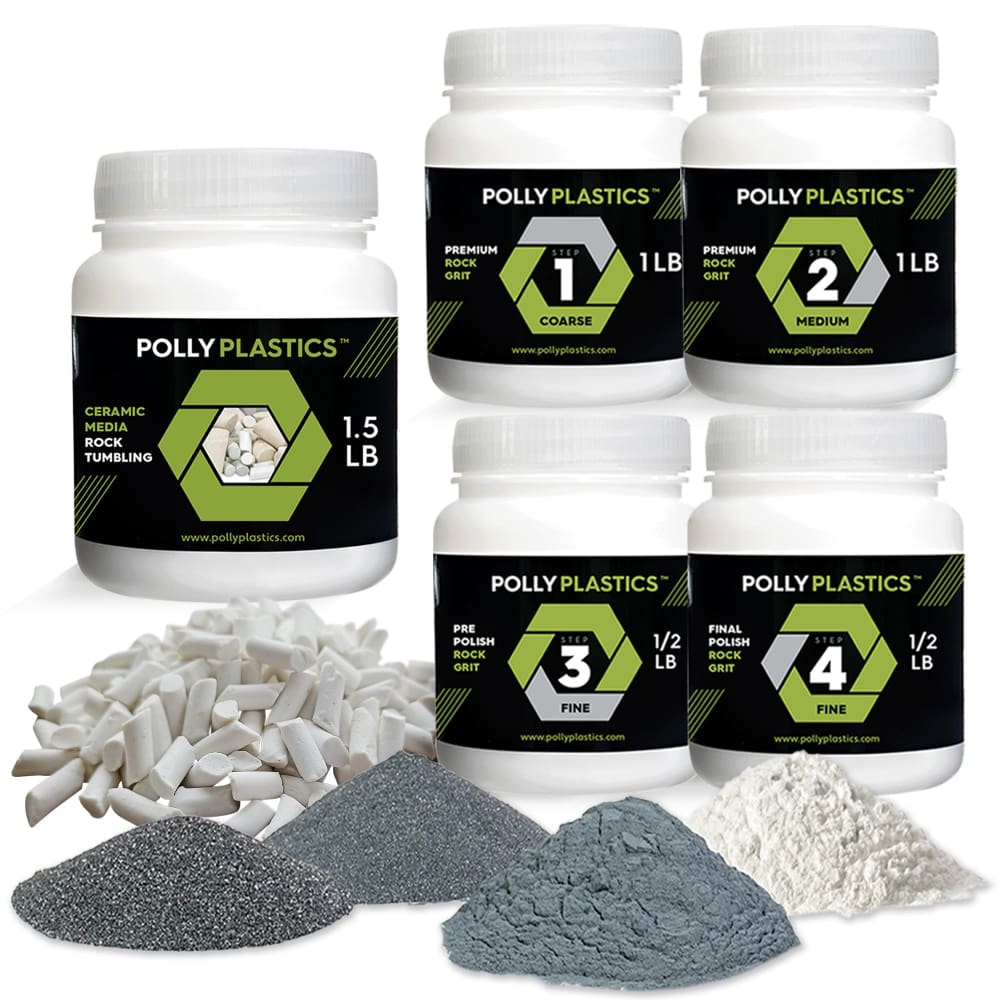
Polly Plastics Rock Tumbling Grit Kit with Ceramic Filler
Beginners who want clearly documented abrasive sizes plus reusable ceramic media in one complete rotary or vibratory-friendly kit.
4-step kit + 1.5 lb ceramic; seller states five 3 lb tumbles Check Price on AmazonGANGOU 2 LB Ceramic Tumbling Media
Best for: Small rotary barrels that need reusable non-abrasive filler and cushioning without buying an oversized bulk pack.
Check Price on AmazonWhy it made the shortlist
- 2 lb of non-abrasive ceramic cylinders measuring about 3/16 × 3/8 inch.
- Small cylinders help occupy voids between rocks and increase contact points in a mixed-size load.
- Reusable ceramic can move through stages after thorough cleaning when it has already been broken in.
- A 2 lb quantity is easier to size for hobby barrels than a large bulk carton.
Know before buying
- Fresh ceramic can have sharp edges; condition it in an earlier stage before using it with a delicate pre-polish or polish load.
- Ceramic helps manage barrel action but does not replace a compatible rock mix or correct working volume.
- Availability on Amazon can change; use the current listing before purchase.
Compare the ceramic media options
| Product | Quantity / size | Best for | Main tradeoff |
|---|---|---|---|
| GANGOU ceramic media | 2 lb; 3/16 × 3/8 in cylinders | Small hobby barrels | Less economical for heavy repeated use |
| YHAspace bulk ceramic | 8 lb; 3/16 × 3/8 in cylinders | Frequent or larger-volume tumbling | Too much for many first-time users |
| Polly Plastics grit + ceramic kit | 1.5 lb small ceramic plus four abrasive stages | First complete supply purchase | You are buying grit and polish at the same time |
Other ceramic media options
YHAspace 8 LB Ceramic Filler Media
Best for: Frequent tumblers and larger barrels that consume enough reusable ceramic media to justify a bulk pack.
Check Price on AmazonWhy it made the shortlist
- 8 lb of non-abrasive 3/16 × 3/8 inch ceramic cylinders.
- Bulk quantity suits repeated batches, larger barrels or users who run more than one tumbler.
- Ceramic can fill voids, reduce large impact gaps and help create a more even working load.
- Reusable format makes more sense when media is cleaned thoroughly between stages.
Know before buying
- Eight pounds is excessive for a casual beginner running one small barrel.
- Fresh media should be conditioned before delicate later stages.
- Ceramic is not a substitute for grit; it changes load geometry and contact rather than replacing the abrasive sequence.
Polly Plastics Rock Tumbling Grit Kit with Ceramic Filler
Best for: Beginners who want clearly documented abrasive sizes plus reusable ceramic media in one complete rotary or vibratory-friendly kit.
Check Price on AmazonWhy it made the shortlist
- Manufacturer lists 1 lb 60/90 coarse silicon carbide, 1 lb 180/220 medium silicon carbide, 0.5 lb 500 fine silicon carbide and 0.5 lb 1200 aluminum oxide polish.
- Includes 1.5 lb of small non-abrasive ceramic cylinders about 3/16 inch diameter by 3/8 inch long.
- Manufacturer states the kit is enough for one 15 lb tumble or five 3 lb tumbles.
- Ceramic can be cleaned and carried through stages after being properly broken in, reducing the need for stage-specific plastic filler.
Know before buying
- The included quantities are sized for hobby batches rather than high-volume continuous use.
- Fresh ceramic should be run in an earlier stage before it enters a delicate pre-polish or polish load.
- The final finish still depends on the stones being ready; a polish compound cannot erase scratches left by incomplete earlier stages.
What ceramic media actually does
Non-abrasive ceramic is not a replacement for grit. Its main jobs are to fill voids, increase contact points, stabilize the load and reduce damaging impact gaps. Because the cylinders are hard, they also help carry abrasive through the moving load without compressing the way plastic pellets do.
→
→
→
Small vs large ceramic cylinders
Small ceramic reaches into narrow gaps and increases the number of contact points. Larger cylinders occupy volume faster when a barrel has big voids. A mixed-size ceramic load can combine both advantages, but you do not need to buy every size before you have observed how your own barrel behaves.
How much ceramic media should you add?
Add enough to correct the working volume and size distribution, not enough to hit an arbitrary media-to-rock percentage. If the barrel already rolls smoothly at the appropriate fill level, more ceramic only displaces rock. If large pieces leave wide empty spaces, media can restore a denser, gentler load.
Read How Full Should a Rock Tumbler Be? before treating ceramic as a universal recipe.
Can ceramic move from coarse grit to polish?
Yes, reusable ceramic can often move through stages after meticulous cleaning, but fresh ceramic should be broken in first. New cylinders can have edges capable of scratching stones in late stages. Run fresh media in coarse or medium work before trusting it in pre-polish or polish.
Ceramic vs plastic media
Ceramic is hard, washable and useful in rotary or vibratory workflows. Plastic pellets are softer and excellent for cushioning fragile material in rotary barrels, but grit can embed in them. Keep used plastic dedicated to the same stage. For a full side-by-side explanation, see Ceramic vs Plastic Tumbling Media.
When ceramic media will not fix the batch
- Rocks are incompatible in hardness or fracture behavior.
- The barrel is already overfilled and the load barely moves.
- Stage 1 ended before pits and damaged areas were removed.
- Coarse grit contaminated a later stage.
- The stone itself has porous, grainy or undercutting material that will not take a uniform polish.
Common ceramic-media questions
Does ceramic media wear out?
Yes, slowly. Reusable ceramic rounds and becomes smaller over many cycles. That is normal and often makes broken-in pieces more useful in later stages.
Should ceramic be the same hardness as the rocks?
For common hard-rock tumbling, durable hard ceramic is preferred because soft media would wear rapidly. The goal is stable filler and contact—not to introduce another fragile component.
Can I use ceramic with obsidian?
Yes, but obsidian still requires gentle barrel action. Media helps reduce impact gaps; it does not make a fast, loose or poorly sorted obsidian load safe.