Buying guide
Best Rock Tumbling Grit Kits: What to Buy for a Complete 4-Stage Process
Compare grit kits by abrasive transparency, quantity, included media and the job each stage actually needs to do—not by the number of packets in the box.
Top grit-kit picks
See the products before the deep dive
Start with the shortlist, then use the guide below to decide which tradeoffs actually matter for your batch.
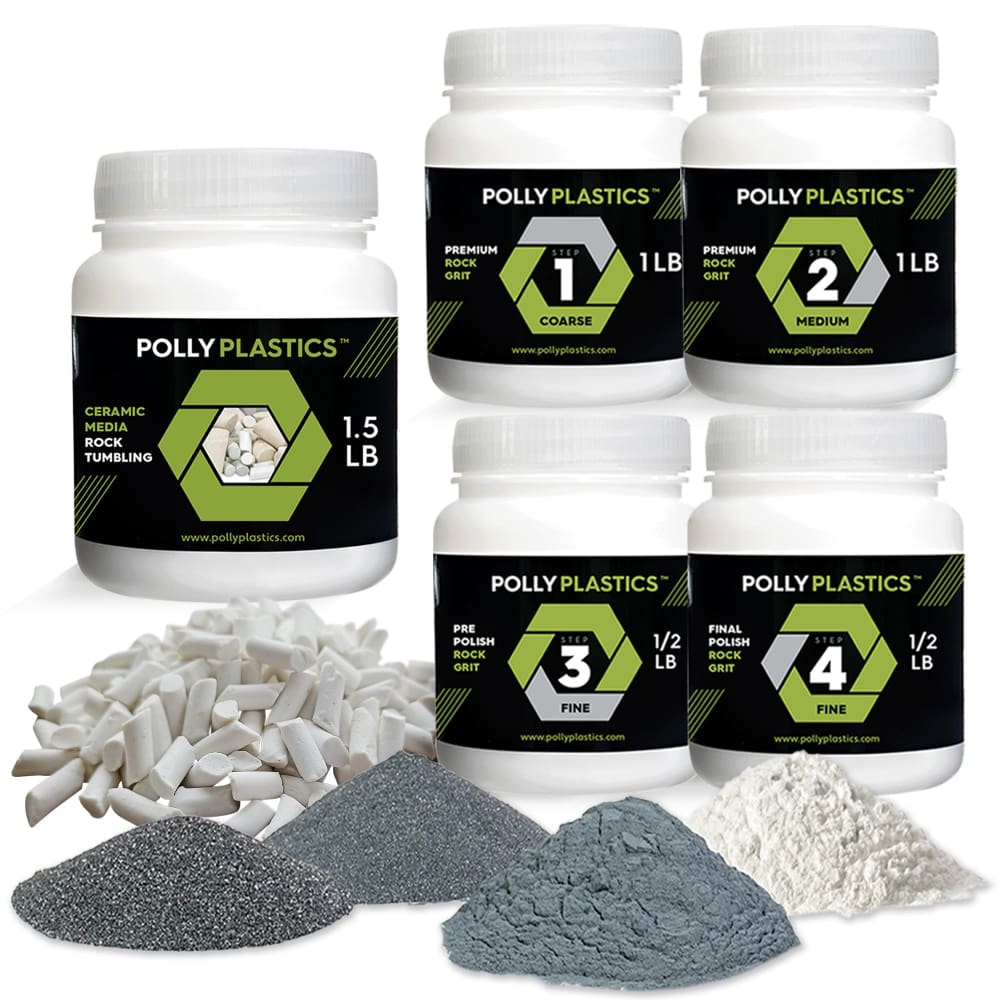
Polly Plastics Rock Tumbling Grit Kit with Ceramic Filler
Beginners who want clearly documented abrasive sizes plus reusable ceramic media in one complete rotary or vibratory-friendly kit.
4-step kit + 1.5 lb ceramic; seller states five 3 lb tumbles Check Price on Amazon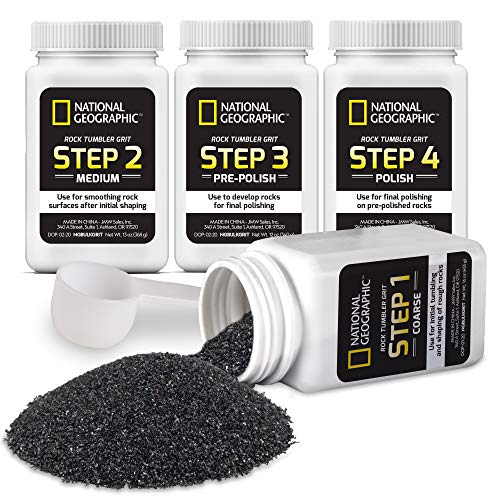
National Geographic / Blue Marble Rock Tumbler Grit and Polish Refill Kit
Beginners who want a simple four-stage refill pack without buying media at the same time.
Seller states up to 20 lb of rocks Check Price on Amazon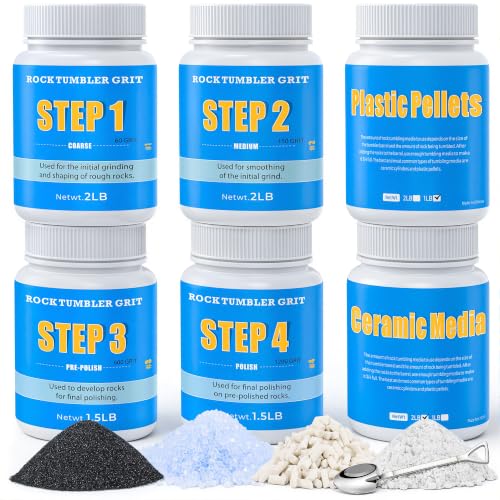
KomeStone 10 LB Rock Tumbling Grit & Media Kit
Frequent tumblers who want a bulk four-stage abrasive supply plus both ceramic media and plastic cushioning pellets.
10 lb total kit; seller states up to 70 lb of rocks Check Price on AmazonPolly Plastics Rock Tumbling Grit Kit with Ceramic Filler
Best for: Beginners who want clearly documented abrasive sizes plus reusable ceramic media in one complete rotary or vibratory-friendly kit.
Check Price on AmazonWhy it made the shortlist
- Manufacturer lists 1 lb 60/90 coarse silicon carbide, 1 lb 180/220 medium silicon carbide, 0.5 lb 500 fine silicon carbide and 0.5 lb 1200 aluminum oxide polish.
- Includes 1.5 lb of small non-abrasive ceramic cylinders about 3/16 inch diameter by 3/8 inch long.
- Manufacturer states the kit is enough for one 15 lb tumble or five 3 lb tumbles.
- Ceramic can be cleaned and carried through stages after being properly broken in, reducing the need for stage-specific plastic filler.
Know before buying
- The included quantities are sized for hobby batches rather than high-volume continuous use.
- Fresh ceramic should be run in an earlier stage before it enters a delicate pre-polish or polish load.
- The final finish still depends on the stones being ready; a polish compound cannot erase scratches left by incomplete earlier stages.
Compare the grit kits first
| Kit | What is included | Seller-stated coverage | Best fit |
|---|---|---|---|
| Polly Plastics + ceramic | 60/90 SiC, 180/220 SiC, 500 SiC, 1200 aluminum oxide + 1.5 lb ceramic | One 15 lb tumble or five 3 lb tumbles | Best documented beginner bundle |
| National Geographic refill | Four-stage grit/polish refill + scoop | Up to 20 lb of rocks | Simple compact refill |
| KomeStone 10 lb | Four abrasive stages + 2 lb ceramic + 1 lb plastic pellets | Up to 70 lb of rocks | Frequent / larger-volume use |
Coverage figures are manufacturer or Amazon-listing claims, not site-measured yield. Actual consumption depends on load weight, repeat coarse stages and your recipe.
Other grit kits worth comparing
National Geographic / Blue Marble Rock Tumbler Grit and Polish Refill Kit
Best for: Beginners who want a simple four-stage refill pack without buying media at the same time.
Check Price on AmazonWhy it made the shortlist
- Four-stage refill sequence covers shaping, smoothing, pre-polish and final finishing.
- the pack can process up to 20 lb of rocks, depending on recipe and batch size.
- Includes a measuring scoop and instructions, which lowers the setup friction for a first refill purchase.
- Works as a compact consumables purchase when you already have enough rock and do not need filler media.
Know before buying
- The Amazon listing does not present the same detailed abrasive-size breakdown as the Polly Plastics kit, so buyers who want fully itemized grit specifications may prefer a more transparent formula list.
- No ceramic or plastic filler is included, so underfilled barrels still need suitable rock or separate media.
- A four-stage kit cannot compensate for stones that leave coarse grind with pits, cracks or bruising.
KomeStone 10 LB Rock Tumbling Grit & Media Kit
Best for: Frequent tumblers who want a bulk four-stage abrasive supply plus both ceramic media and plastic cushioning pellets.
Check Price on AmazonWhy it made the shortlist
- Amazon listing itemizes 2 lb coarse 60-grit silicon carbide, 2 lb 150-grit silicon carbide, 1.5 lb 600-grit silicon carbide and 1.5 lb 1200-grit aluminum oxide finishing powder.
- Also includes 2 lb ceramic media and 1 lb plastic pellets, so one purchase supports both void filling and extra cushioning.
- the 10 lb kit can service up to 70 lb of rock across multiple batches.
- Bulk format can reduce repeated small refill purchases for active hobbyists.
Know before buying
- Large quantities are unnecessary for someone who is still deciding whether rock tumbling will become a long-term hobby.
- Keep plastic pellets separated by grit stage because abrasive can become embedded in the plastic.
- The label 'polish' varies across kits; final luster still depends on surface preparation, stone type and the actual finishing compound.
What actually makes one rock tumbling grit kit better?
A kit is not better because it has more bags. The useful questions are whether the abrasive sequence is clear, whether you know what the final finishing compound is, whether the quantities match your barrel, and whether filler media is included when your loads regularly need it.
Transparent abrasive sizes
Knowing the abrasive and approximate grade makes troubleshooting easier. If a batch stalls, you can compare your process with a known coarse, medium, fine and final stage instead of guessing what a proprietary packet contains.
Enough coarse grit
Coarse grind normally consumes the most time and may need to be repeated. A kit that looks balanced on paper can run out of coarse material long before you need more polish.
Useful media, not filler for the box
Ceramic media has a real job when a barrel needs more working volume, more contact points or better cushioning. Plastic pellets are softer and can be useful later, but they should stay dedicated to the same grit stage.
A real final-finishing compound
The word polish is used inconsistently in retail kits. Focus on the stone’s surface readiness and the actual finishing compound, not the stage number printed on the package.
How much grit should a beginner buy?
If you run a single small barrel occasionally, buying a huge bulk kit can save nothing; the unused material simply sits on a shelf. Start with enough abrasive for several complete batches, learn how often your stones repeat Stage 1, and then scale up. Active tumblers with multiple barrels can justify bulk quantities much sooner.
Use the Rock Tumbler Grit Calculator and How Much Grit per Pound of Rock? to estimate a practical starting charge from actual material weight rather than barrel label alone.
Do you need ceramic media in the same kit?
No. If your barrel is already filled with a good distribution of compatible rock sizes, extra media may not be necessary. Ceramic becomes useful when the load has too much empty space, large gaps, delicate material or too few small pieces. Buying media separately also lets you choose the quantity and size that match your workflow.
What to avoid when buying grit
- A kit with no clear stage sequence or no explanation of what the final packet contains.
- Buying only polish when the real problem is incomplete coarse grinding.
- Assuming every stone needs exactly one week in each stage.
- Using plastic pellets from a coarse stage in a later polish stage.
- Choosing the largest kit before you know how often you will actually run the tumbler.
Common questions about grit kits
Can one grit kit work in any rotary tumbler?
Most general rock-tumbling abrasives are not tied to one machine brand, but the amount used should follow the abrasive and tumbler instructions. Barrel geometry and load weight still matter.
Is 1200 grit the same as final polish?
Not universally. Mesh numbers and abrasive materials are not directly interchangeable, and manufacturers use the word “polish” differently. Judge the final stage by the actual compound and the finish it produces on your material.
Can grit be reused?
Normally no. Abrasive breaks down and becomes part of the slurry. Reusable ceramic media is different: it can often be cleaned and used again after the prior stage is removed thoroughly.
Why did a new grit kit still leave my rocks dull?
The most common reason is not the brand of grit—it is surface preparation. If scratches, pits, bruises or contamination remain before polish, a new bag of finishing compound will not repair them.