Equipment comparison
Flat Lap vs Cabbing Machine: Which Lapidary Workflow Fits You?
Compare one-disc-at-a-time flexibility with a dedicated six-wheel cabbing progression, including space, water, consumables and long-term workflow.
Compare the finishing workflows
See the products before the deep dive
Start with the shortlist, then use the guide below to decide which tradeoffs actually matter for your batch.
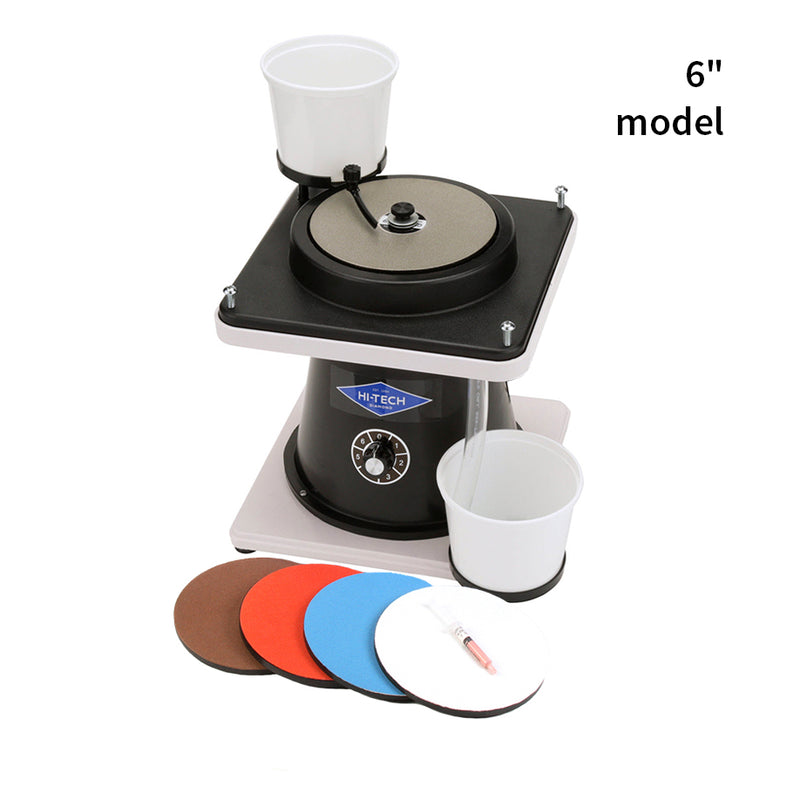
Hi-Tech Diamond All-U-Need 6-inch Rock/Mineral
Beginners who want a compact flat-lap machine for shaping, smoothing and polishing cabochons and flat rock surfaces.
6 in lap; 2-1/4 in working radius Check Price on Amazon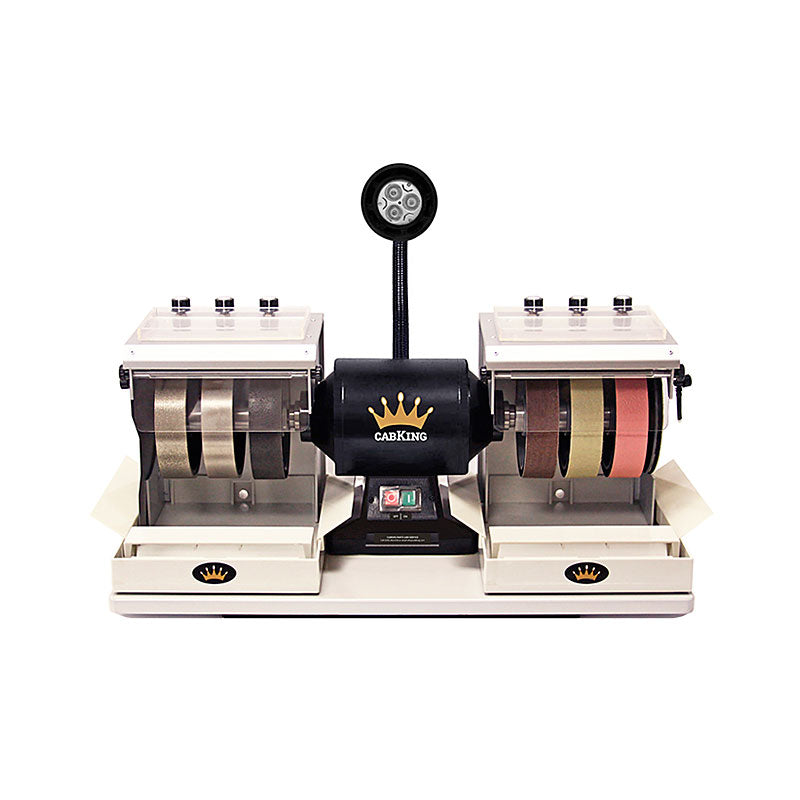
CabKing 6-inch Cabbing Machine
A serious home lapidary setup that wants one dedicated multi-wheel cabbing station from coarse grinding through pre-polish and polishing.
Six 6 in diamond wheels + side laps Check Price on AmazonFlat lap vs cabbing machine at a glance
| Decision | Flat lap | Six-wheel cabbing machine |
|---|---|---|
| Stage changes | Change discs/laps on one platen | Move the stone from wheel to wheel |
| Space | Compact bench footprint | Permanent wider wet-work station |
| Machine weight example | All-U-Need: about 9 lb | CabKing 6: about 62 lb |
| Motor example | 1/4 hp variable speed, 800–3,400 rpm | 1/4 hp fixed 1,800 rpm |
| Best workflow | Mixed flats, freeforms and occasional cabs | Repeated cabochon production |
| Consumables | Discs, backing plates, polishing pads | Grinding/resin wheels, pads/paste, water-system parts |
Why a flat lap is easier to justify as a first finishing machine
A compact flat lap can grind, smooth and polish on one horizontal platform. The tradeoff is stage changeover: you swap the abrasive surface as the workpiece progresses. That is slower when you are producing many cabochons, but it keeps the initial machine smaller and makes the same platform useful for flat backs, freeforms and broader surfaces.
Hi-Tech Diamond All-U-Need 6-inch Rock/Mineral
Best for: Beginners who want a compact flat-lap machine for shaping, smoothing and polishing cabochons and flat rock surfaces.
Check Price on AmazonWhy it made the shortlist
- 1/4 hp variable-speed direct-drive motor rated from 800 to 3,400 rpm.
- Compact 10 x 10 x 12 in machine footprint and 9 lb machine weight.
- Rock/mineral kit includes 180# lap, 325/600/1200 smoothing discs, polishing pad and 14,000# diamond paste.
- Built-in water setup supports wet grinding and polishing.
Know before buying
- Six-inch working area is more compact than the 8-inch model for larger flats and broad pieces.
- Consumable discs and backing plates become part of the long-term operating cost.
- It is a flat-lap workflow, not a substitute for a saw when material must be cut first.
Why a cabbing machine becomes faster for repeated cab work
A six-wheel station keeps a full abrasive progression mounted. Instead of stopping to change discs, you move the cabochon across the wheel sequence. The workflow becomes more continuous, but the machine is heavier, more expensive and tied to a permanent wet bench.
CabKing 6-inch Cabbing Machine
Best for: A serious home lapidary setup that wants one dedicated multi-wheel cabbing station from coarse grinding through pre-polish and polishing.
Check Price on AmazonWhy it made the shortlist
- Six-wheel rough-to-polish sequence: 80#, 220#, 280#, 600#, 1,200# and 3,000#.
- 1/4 hp direct-drive motor with a fixed 1,800 rpm operating speed.
- Separate water pump, adjustable water system, trays, hand rests and splash guards are included.
- Machine measures about 27 x 13.5 x 12 in and weighs 62 lb.
Know before buying
- High purchase price and 62 lb weight make this a dedicated-workbench machine rather than a casual portable tool.
- Replacement wheels, polishing consumables and water-management setup add ongoing cost.
- A dedicated trim saw or optional attachment may still be useful for preparing rough before cabbing.
Working area changes the hand technique
Flat lap
You work against a horizontal abrasive surface. It is intuitive for flat backs and broad faces, and disc changes define the stage progression.
Cabbing wheels
You work across curved wheel faces. The wheel sequence favors controlled dome shaping and repeated cabochon work.
Water
Both are wet workflows. Plan clean-water delivery, slurry capture and drying rather than treating water as an accessory.
Inspection
Neither machine removes the need to inspect scratches between stages. Moving forward too early simply carries defects into finer abrasives.
Which one fits a small home workshop?
The All-U-Need measures roughly 10 x 10 x 12 inches and weighs about 9 lb, which makes storage or a multi-use bench realistic. CabKing recommends approximately a 2 x 3 ft cleared work area for the 6-inch machine, and the unit weighs about 62 lb. Those numbers turn “machine preference” into a real space decision.
Choose by weekly workflow, not by prestige
You make occasional cabs, polish flat surfaces, value portability or want to learn one abrasive stage at a time.
You regularly shape cabochons, want every grit ready at once and have a permanent wet-work bench.