Equipment review
Hi-Tech Diamond 6-inch Trim Saw Review: A Compact Saw for Cab Preforms
See how the 6-inch blade, variable-speed motor, wet-cutting reservoir and compact footprint fit a home lapidary workflow before you buy.
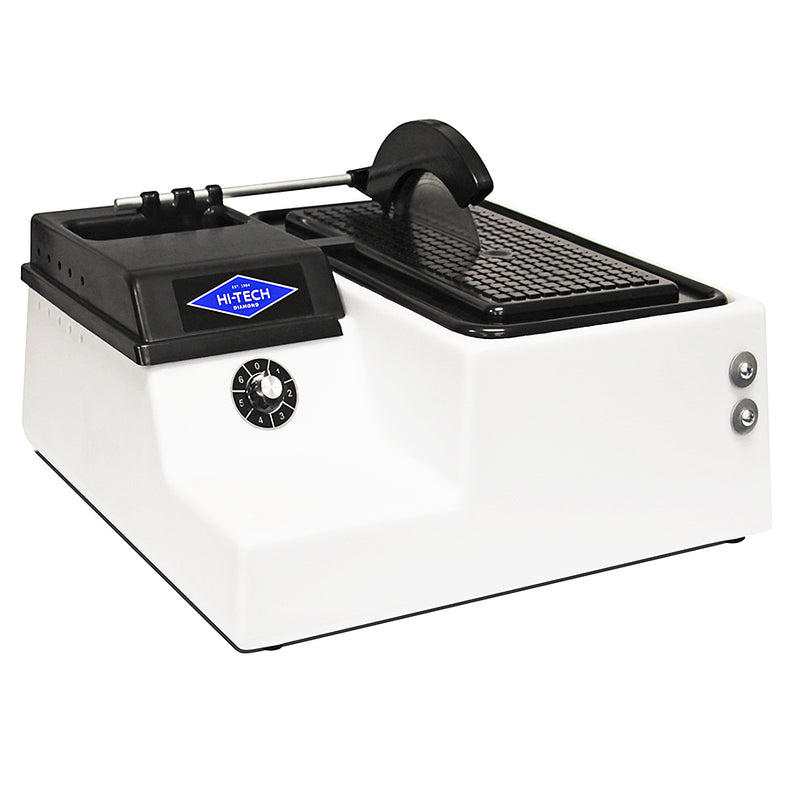
Hi-Tech Diamond 6-inch Trim Saw
Best for: Home lapidary users trimming cabochon preforms, facet rough and smaller slabs without stepping up to a full slab saw.
Check Price on AmazonWhy it made the shortlist
- 1/4 hp variable-speed direct-drive motor rated from 800 to 3,400 rpm.
- 15-1/2 x 9 in work table with a built-in 16 oz coolant reservoir.
- Accepts 6 in blades with a 5/8 in arbor.
- Manufacturer includes two different 6 in diamond blades, splash shield, apron, manual and one-year warranty.
Know before buying
- A trim saw is intended for smaller trimming work, not efficient slabbing of large rough.
- Wet cutting still creates splash and cleanup; plan a dedicated work surface.
- Blade choice, feed pressure and coolant practice matter as much as motor speed.
Use the blade to turn slabs or small rough into manageable preforms.
Specifications that matter in a real shop
| Machine size | 17 x 17 x 11 in; about 15 lb | Portable enough for a home bench, but still needs a splash-tolerant setup. |
|---|---|---|
| Work table | 15-1/2 x 9 in | Room for small slabs and preforms without pretending to be a large slabbing platform. |
| Motor | 1/4 hp, 800–3,400 rpm variable speed | Lets you tune blade speed within the machine’s designed range. |
| Blade / arbor | 6 in blade, 5/8 in arbor | Built around small trimming work rather than large slabbing. |
| Cut envelope | 1-3/4 in blade height; 5-1/4 in blade depth | Useful for preforms and modest rough; not a substitute for a slab saw. |
| Reservoir | 16 oz built-in coolant reservoir | Keeps the wet-cutting loop self-contained for shorter sessions. |
What comes in the box
6 x .012 x .015 in; intended for many rocks and minerals.
6 x .015 x .023 in; a longer-wearing option suited to materials including quartz and fine agate.
Useful because wet cutting moves coolant and slurry beyond the cut line.
The current package also carries a one-year manufacturer warranty.
First setup: make the wet zone predictable
Set the 15 lb machine on a rigid, level, splash-tolerant surface.
Match the blade to the material and confirm correct mounting before powering the motor.
Fill the built-in reservoir as directed and confirm the blade is carrying water through the cut zone.
Use a non-critical piece to learn feed pressure and splash behavior before cutting valuable rough.
What the 6-inch format is actually good at
Trim a slab close to the intended outline before moving to a flat lap or cabbing machine.
Create manageable pieces without dedicating bench space to a much larger saw.
Remove waste, square small edges and shorten pieces that already fit the saw’s cut envelope.
If the job begins with larger rough or geodes, move up to a slab saw rather than forcing the trim saw.
Blade choice, feed pressure and speed
The variable-speed motor is useful, but the result still depends on blade condition, coolant and a patient feed. Faster is not automatically cleaner. Let the diamond edge cut instead of forcing the material into the blade, and inspect for deflection, glazing or heat if the cut quality changes.
Maintenance and ownership costs
Remove sediment before it hardens, wipe the table and inspect the reservoir and splash areas.
Blade wear and condition affect cutting quality and become a recurring ownership cost.
The table, motor cover/blade guard and related parts are replaceable components, which matters for long-term ownership.
A compatible vise can hold material for precise cuts, but it is manually advanced rather than an automatic feed.
Who should buy it?
You already have slabs or small rough and need cleaner preforms before grinding or cabbing.
You mainly need to turn fist-size rough or geodes into slabs. A larger slab saw is the better category.