Cutting comparison
Trim Saw vs Slab Saw: Which Lapidary Saw Do You Actually Need?
Choose the saw by what enters the cut—small preforms or larger rough—then compare capacity, bench space and the equipment needed after cutting.
Compare the cutting roles
See the products before the deep dive
Start with the shortlist, then use the guide below to decide which tradeoffs actually matter for your batch.
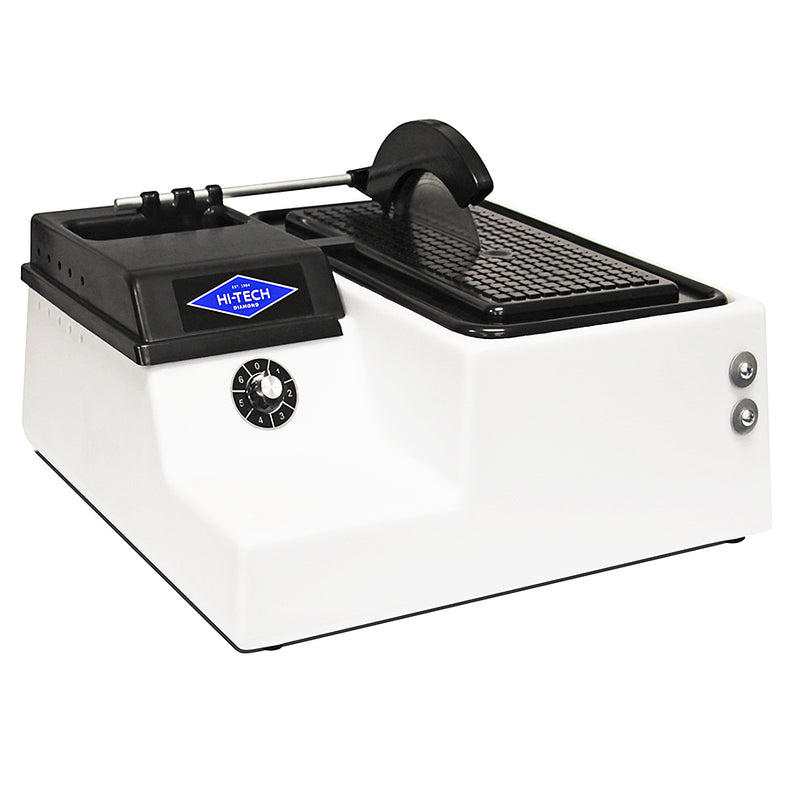
Hi-Tech Diamond 6-inch Trim Saw
Home lapidary users trimming cabochon preforms, facet rough and smaller slabs without stepping up to a full slab saw.
6 in blade; 1-3/4 in blade height Check Price on Amazon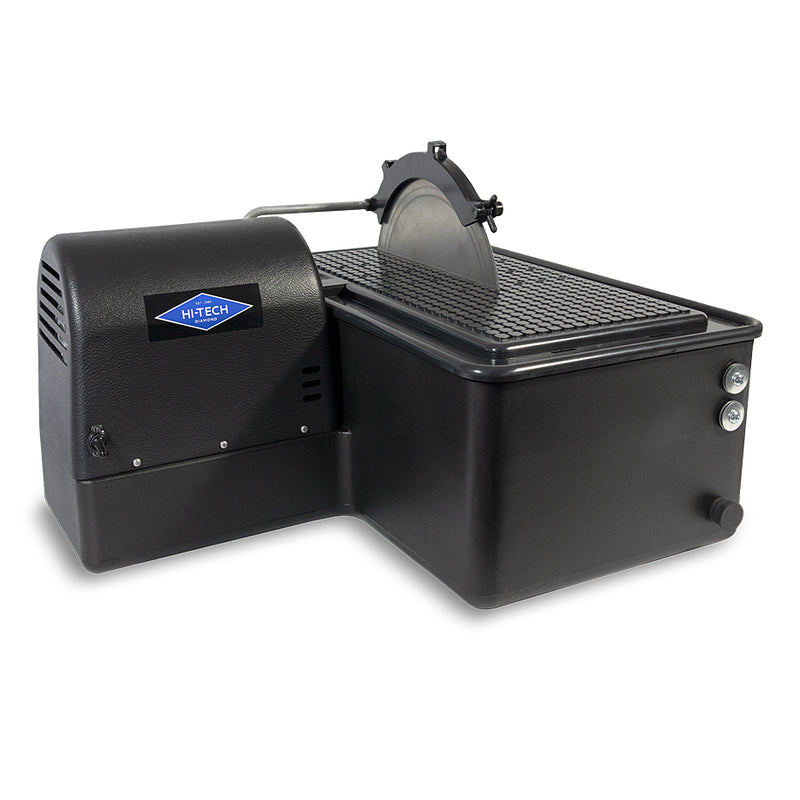
Hi-Tech Diamond 10-inch Slab Saw
Home workshops that need to turn larger rough, geodes and chunks into manageable slabs before trimming and cabbing.
10 in blade; 9-3/4 in blade depth Check Price on Amazon→
→
→
→
Trim saw vs slab saw comparison
| Question | 6-inch trim saw | 10-inch slab saw |
|---|---|---|
| Primary job | Preforms, smaller slabs, precise trimming | Larger rough, geodes, slab production |
| Motor | 1/4 hp variable speed, 800–3,400 rpm | 1/3 hp fixed speed, about 1,725 rpm |
| Table | 15-1/2 x 9 in | 19-3/4 x 12 in |
| Machine weight | About 15 lb | About 35 lb |
| Coolant reservoir | 16 oz | 2.5 qt |
| Blade height | 1-3/4 in | 3-3/4 in |
| Best first purchase when… | You already work from slabs or small rough | Your rough is too large to become preforms directly |
Why the blades are different
Trim-saw blades are generally thinner because the cut is smaller and material loss matters. Slab-saw blades are built for heavier cuts. Blade construction, material, coolant and the blade maker’s maximum RPM still control how the saw should actually be operated.
Hi-Tech 6-inch Trim Saw
Hi-Tech Diamond 6-inch Trim Saw
Best for: Home lapidary users trimming cabochon preforms, facet rough and smaller slabs without stepping up to a full slab saw.
Check Price on AmazonWhy it made the shortlist
- 1/4 hp variable-speed direct-drive motor rated from 800 to 3,400 rpm.
- 15-1/2 x 9 in work table with a built-in 16 oz coolant reservoir.
- Accepts 6 in blades with a 5/8 in arbor.
- Manufacturer includes two different 6 in diamond blades, splash shield, apron, manual and one-year warranty.
Know before buying
- A trim saw is intended for smaller trimming work, not efficient slabbing of large rough.
- Wet cutting still creates splash and cleanup; plan a dedicated work surface.
- Blade choice, feed pressure and coolant practice matter as much as motor speed.
Hi-Tech 10-inch Slab Saw
Hi-Tech Diamond 10-inch Slab Saw
Best for: Home workshops that need to turn larger rough, geodes and chunks into manageable slabs before trimming and cabbing.
Check Price on AmazonWhy it made the shortlist
- 1/3 hp motor runs at 1,725 rpm.
- 19-3/4 x 12 in removable saw table and built-in 2.5 qt coolant reservoir.
- Machine measures 19 x 21 x 12 in and weighs about 35 lb.
- Includes two 10 in diamond blades, spray shield, apron, manual and one-year warranty.
Know before buying
- A 35 lb wet saw needs a stable dedicated work surface and more cleanup room than a trim saw.
- It is built for larger cuts, so it is not the most efficient choice for tiny cabochon trimming.
- Blade, coolant and feed technique remain ongoing operating considerations.
Choose by the material entering the machine
You buy slabs, cut small rough, make cabochon preforms or value a lighter machine that can share bench space.
Your collection contains larger chunks that cannot be sensibly trimmed until they are divided into slabs or smaller pieces.
Workshop implications
The slab saw is not merely a trim saw with four more inches of blade. It is heavier, holds much more coolant and needs more clearance for the material entering the cut. That changes the bench, splash-control and cleanup plan. The 6-inch trim saw is easier to integrate into a mixed-use home shop; the 10-inch slab saw makes more sense as a dedicated wet-cutting station.
What comes after the cut?
A saw does not replace grinding and polishing. Once the blank is cut, a flat lap or cabbing machine removes saw marks, establishes shape and carries the surface through finer abrasives. If you are choosing that next station, use Flat Lap vs Cabbing Machine.