Lapidary maintenance guide
Lapidary Saw Coolant Guide: Water vs Oil
Choose lapidary saw coolant from the machine manual first, then match blade, material, cleanup and corrosion control without mixing incompatible wet-cutting systems.
Coolant product example
See the products before the deep dive
Start with the shortlist, then use the guide below to decide which tradeoffs actually matter for your batch.
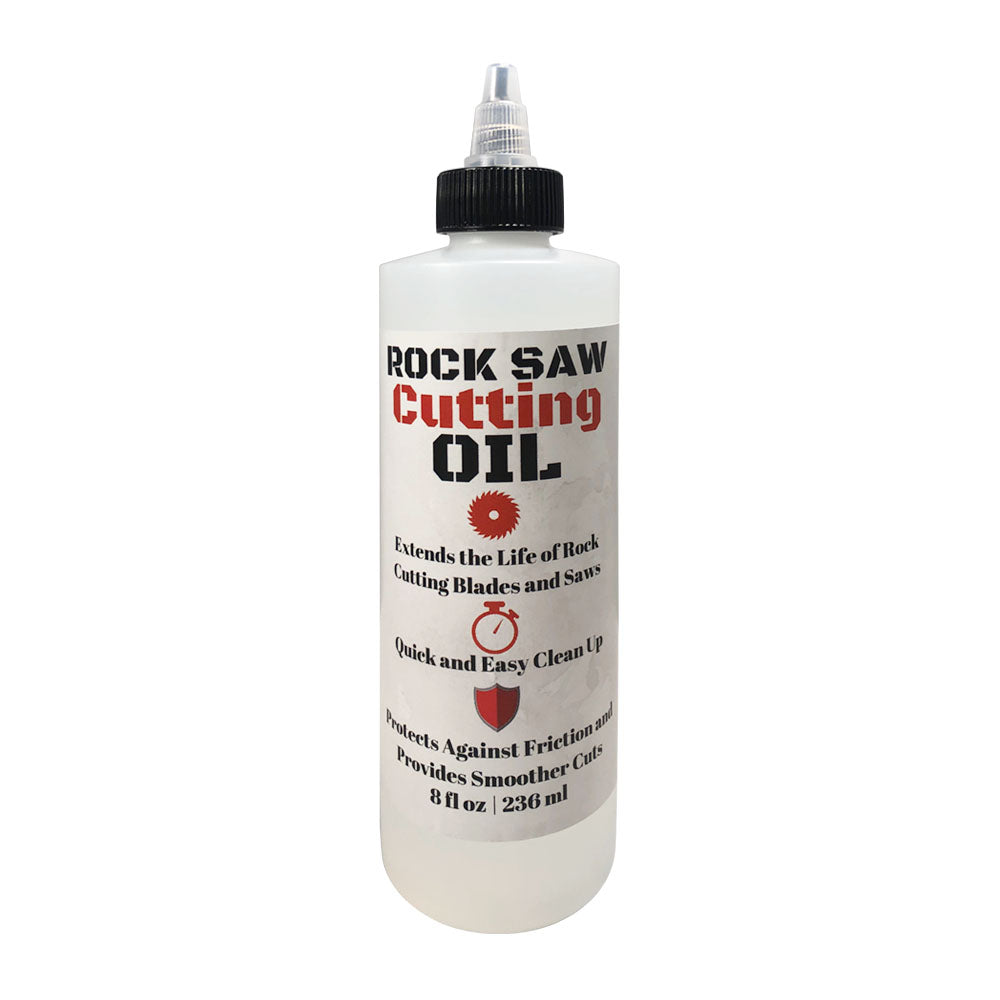
UniSport / UniProducts Rock Saw Cutting Oil - 8 oz
Lapidary saw owners whose machine and blade documentation specifically permit light cutting oil and who want a small clear, odorless lubricant with corrosion inhibitors.
8 fl oz / 236 mL bottle Check Price on AmazonWhat coolant actually does
Controls heat
Fluid removes heat from the blade/stone contact zone and reduces thermal stress.
Carries swarf
It moves fine stone and metal debris away from the cutting edge.
Supports the blade
Correct fluid helps the diamond rim cut instead of rubbing hot and glazing.
Protects the machine
Approved additives may help corrosion control, but only when compatible with seals and bearings.
Water, water-soluble coolant and oil are not interchangeable
| Fluid type | Typical reason to use it | Main caution |
|---|---|---|
| Water / water-based system | Common in compact trim saws and glass/soft-material cutting systems | Plain water may not be the approved fluid for every saw or blade |
| Water-soluble coolant | Adds lubrication/corrosion control while keeping a water-based workflow | Mix only to the product and machine instructions |
| Light cutting oil | Used in some lapidary saws for dense/hard material and longer blade life | Requires machine approval, spill control and more deliberate cleanup |
Example: small-bottle lapidary cutting oil
The UniSport / UniProducts 8 oz Rock Saw Cutting Oil is a clear, odorless light oil sold specifically for lapidary saw use and includes anti-rust / anti-corrosion claims. It is useful only when your machine permits oil. For a large slab-saw reservoir, an 8 oz bottle may be too small to be economical.
UniSport / UniProducts Rock Saw Cutting Oil - 8 oz
Best for: Lapidary saw owners whose machine and blade documentation specifically permit light cutting oil and who want a small clear, odorless lubricant with corrosion inhibitors.
Check Price on AmazonWhy it made the shortlist
- Clear, odorless low-viscosity oil sold for lapidary rock saw use.
- Product information highlights anti-rust and anti-corrosion inhibitors.
- Small 8 oz bottle is practical for light use or for a machine that needs only a modest reservoir charge.
- The pointed bottle makes controlled filling easier than pouring from a large container.
Know before buying
- Use only when the saw manufacturer allows oil; some machines are designed for water or water-soluble coolant instead.
- Do not mix coolant types unless the machine and blade instructions explicitly allow it.
- An 8 oz bottle is too small for saws with large reservoirs or frequent high-volume slabbing.
Use the saw manual as the first filter
Use the specified water system or approved additive; do not fill it with oil.
Use the correct concentrate ratio and keep the reservoir clean.
Choose an appropriate lapidary cutting oil and confirm the selected blade/material are compatible.
Do not guess. Ask the machine manufacturer before changing fluid type.
Coolant setup mistakes that shorten blade life
The rim runs hotter and slurry is not cleared from the cut effectively.
Seals, pumps, bearings or blade performance may suffer when the machine was not designed for it.
Heavy slurry can recirculate abrasive debris and hide corrosion or mechanical problems.
Leaving wet slurry in the saw encourages odor, corrosion and hardened cleanup.
Safe handling and disposal
Keep coolant in its labeled container, use eye protection and gloves appropriate to the product safety instructions, and control spills immediately. Stone slurry can contain fine mineral particles and traces of metals from the blade. Do not pour oily slurry or unknown coolant into household drains, soil or stormwater. Follow the coolant label and local waste rules for disposal.
After the cutting session
Turn off and unplug the saw before reaching into the reservoir or blade area.
Clean the table, splash surfaces and reservoir before residue hardens.
Dry the blade and metal surfaces according to manufacturer guidance.
Check blade, arbor, flanges, pump/tubing and fluid condition before the next session.